Welcome
With this relaunch of my website I hope to resume my frequent blog posts about Wildlife and Nature photography. I will also be producing frequent video tutorials about photography in the field, image workflow, and shooting video with your DSLR.
Lastly please bear with me as I consolidate the content and functions of my different websites into this new one as well as migrate all the content I had already published under my old website.
As always feel free to contact me with any questions you may have.
Winter in Yellowstone 2013 Workshop a success
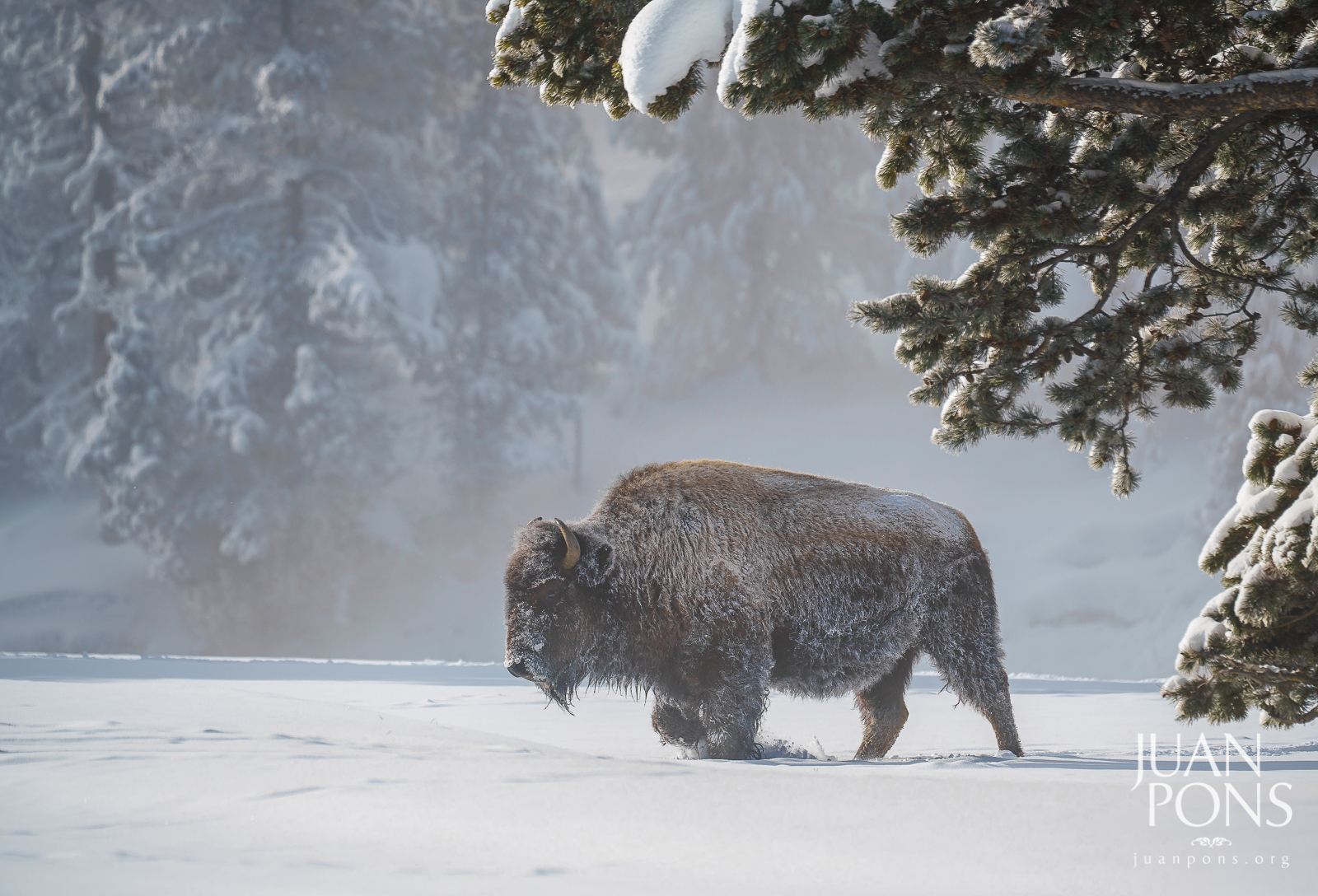
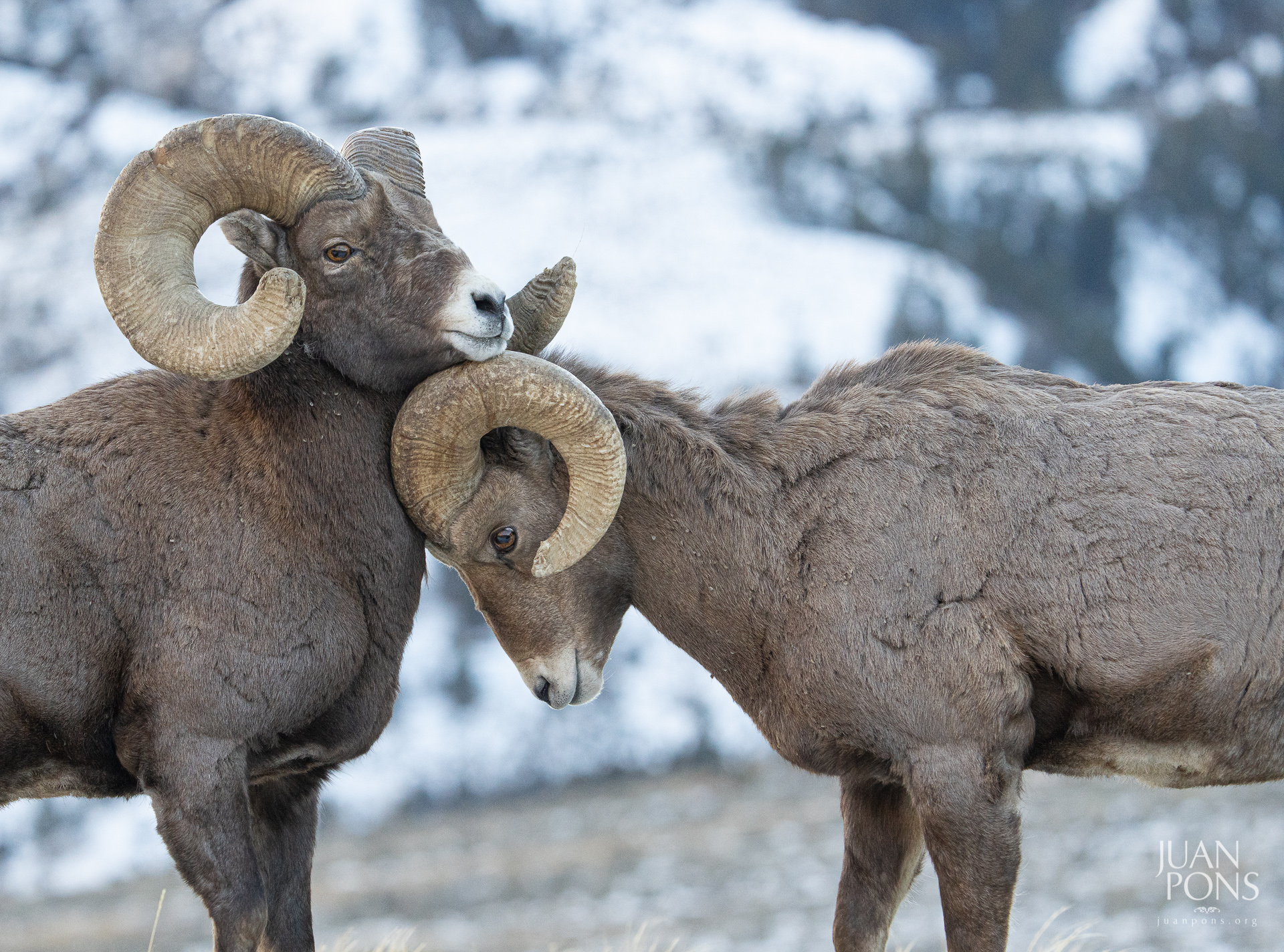
I’ve just returned from my yearly “Winter in Yellowstone” photo workshop and I have to say that it was a resounding success. We had some very cold weather and some balmy weather, we say and photographed Bison, Elk, Pronghorn, Big Horn Sheep, Mule Deer, Mountain Jackrabbit, Bobcat and much more. As always I am eager to return and look forward to what next winter will bring. I am already making the arrangements for next year so if you are interested in joining me, I would encourage you to send me an email, this year the workshop sold out very early and I expect the same for next year.
Below find a short gallery of my favorite images from this winter.
5 quick tips for wildlife photographers
With this article, I hope to start a semi regular series of quick tips for wildlife and nature photographers.
Without further ado, here is the first installment.
1. Keep your eye on the viewfinder – Action can unfold in front of you at any time, and Murphy’s law dictates that you will miss the best opportunity when chimping (If you do not know what chimping means check this article http://en.wikipedia.org/wiki/Chimping)
2. Know your gear – Wildlife photography is somewhat like baseball, you spent lots of time waiting for those few seconds of real action. You NEED to be ready for those few precious seconds; in order to make the best out of those few seconds you must know your equipment better than the back of your hand. You are certain to miss that great shot if you are fumbling with your equipment during those precious seconds.

Sandhill Crane, Bosque del Apache, NM
3. Keep your gear ready – Make sure your camera is on, you have a recently formatted memory card, and the camera is set to your favorite settings. Double check these settings every so often, it is easy to bump your mode dial to an undesired mode inadvertently.
4. Be patient – As stated in #1, wildlife is unpredictable, and do their thing at their own time and pace. Know your subject, learn their behavior and predict their next move.
5. Keep an eye for changing light conditions – When shooting outdoors you can be guaranteed that the light and weather will change. Make sure you keep the sun to your back and pay attention to changing light conditions, and adjust your camera and flash accordingly.

Elk Bull, Yellowstone National Park, WY
Hope you found these useful and I hope to be posting many more of these in the near future.
As always, if you have any questions or comments use the comments section below or you can reach me via Google Plus at http://gplus.to/juanpons.
Juan
Getting the most out of a photo workshop
As I prepare to leave to go back to North Carolina to lead my “Waterfalls of Western NC” Photo workshop, I thought it would be appropriate to put together a short list on how to get the most out of a photo workshop.
One of the fastest, easiest and most effective ways to improve your photography is by learning from experienced professionals, and what better way to do that than going on a photo workshop to some spectacular and beautiful destination.
For some people a photo workshop can be a one in a lifetime opportunity, others are more fortunate and are able to attend a diverse number of workshops. Regardless, each workshop represents a significant investment of your time, capital and resources, as such you want to make sure to get the most out of each single workshop you are fortunate enough to attend.
Here are 6 things to consider in order to improve your next workshop experience:
1. Start with the right attitude
This may seem simple, but it’s probably the most important piece of advice I can give you. Going to a workshop with a positive attitude, with a real desire to learn and having an open mind is the key to enjoying yourself. Be patient and courteous to both your workshop leaders and fellow participants.
2. Know your equipment
Make sure you know as much as possible about your photo gear. Most photo workshops are designed to further your photographic skills, not to show you the basics of your cameras operation. However, if you have questions about a particular aspect of your camera, make sure to ask, bringing the manual also helps!
3. Dress appropriately
Wearing the wrong clothes can turn a fantastic workshop into a miserable experience. For my workshops, I customarily provide a list of recommended gear and clothing to wear appropriate for the location and the expected weather. Make sure you have spares of the most essential items, such as gloves for those winter workshops. Research your destination and look at the weather forecast, and plan accordingly.
4. What do you hope to get out of this workshop?
Decide what you want to get out of the workshop, whether its a specific image you want to make, a photo technique you want to learn, or are just looking for inspiration. Understanding what will make this workshop a success for you will help both you and your instructor MAKE IT a success. Make sure you communicate this information with your workshop leader.
5. Learn as much as you can about the workshop destination
It is often said that the more you learn about something, the better you can capture it in photographs. I truly believe in this adage. Learn as much as you can about your destination, the natural features, the wildlife, the weather, everything and anything. Knowing what makes a location unique will help you make better images.
6. Ask questions and pay attention
The first item on this list was a simple piece of advice, and the last one is even simpler; ask questions, no matter how basic or “dumb” they may seem. You are attending a workshop to learn, help your instructors help you! Sometimes you don’t even know what questions to ask, that is ok, oftentimes watching someone do something is one of the most effective ways to learn. Watch your instructors, study what they do when they are shooting, ask them about what they are doing, try doing what they are doing and ask for feedback.
I hope that these tips help improve your next workshop experience, if you have any questions or comments use the comments section below or you can reach me via Google+.
P.S. I have a couple of openings still available on this workshop, you want to find out more or want to sign up check out the description of the “Waterfalls of Western NC” Photo workshop at my workshops website.
Why I shoot in Av or Aperture Priority mode
I hear it over and over again “real photographers only shoot in manual mode”, and every time I just shake my head. Yes there are plenty of photographers, real or otherwise that shoot in “Aperture Priority”, “Shutter Priority”, or even (gasp…) “Program” mode.
I, myself, shoot in “Av (Aperture Value, in Canon parlance)” otherwise known as “Aperture Priority” about 95% of the time. There are many reasons for this, but I would like to talk about the single most important reason as it applies to wildlife photographers.
Getting the shot!
Wildlife is unpredictable, and in the outdoors light changes very frequently. Often we have just a few seconds to get the shot, sometimes less, and often times with unpredictable light. This is not the time to be fiddling with and making gross aperture and shutter speed adjustments. If you do, chances are you will miss the shot, or get an image that is grossly out of proper exposure.
My process is to set the aperture appropriate to the image that I am looking to make and for the lens I am using, then set my exposure compensation to the middle or “0″ position. With these settings I am ready to react quickly and trip that trigger at the exact moment, knowing that the exposure may not be perfect, but will be close; I call this my safe shot. Once I get this one, two or three, safe shots, I will then use the exposure compensation dial on my camera, WITHOUT taking my eye off the viewfinder, and tweak the exposure to achieve the look I am after. I will then fire off a few more shots, then “chimp”, that is, look at the screen on my camera and take a look at the histogram. At this point I may make some further adjustments and shoot some more, if my subject is still around that is…
You may be wondering, how do I know how to tweak the exposure without taking my eye off the viewfinder. Well I have gotten to know the metering system on the Canon system pretty well, and can reasonably predict how it’s going to react to an specific scene. This just takes time and practice; it also helps to have used Canon film cameras which did not have a screen and histogram.
I very often also hear how camera meters are dumb and that they try to expose everything to a middle grey…. that was true many years ago, any modern digital camera will have a very sophisticated metering systems on which camera manufacturers have spent millions of dollars and countless hours engineering. Modern metering systems are very smart indeed and they can, for example detect that you are trying to shoot something that is white, such as snow and make sure the snow comes out white, not grey. Many of these metering systems are color and scene aware and in the vast majority of cases will get you within a stop or two of the right exposure; in my personal experience within less than one stop.
I for one want to take as full advantage of all the tools at my disposal, and one of the most crucial to me is the meter in my camera.
As an example, take the image above of this Red Fox, this was taken on Mt. Desert Island in Maine while walking along the shoreline in search of a Bald Eagle nest that I had been alerted to. As I was walking along looking for the nest, I saw, out the corner of my eye, this fox sprinting along the edge of the water, mostly out of sight as the coast line in this area is very rocky. I noticed the direction the fox was running in, looked further ahead and tried to predict where I thought I may get an opportunity to make an image. I pointed my camera at that location and pre-focused where I thought the fox would make an appearance, I adjusted my aperture to give me some depth of field and waited for the fox. I was extremely lucky that the fox came out exactly where I had predicted and as soon as I saw the composition I was looking for I squeezed the shutter.
As you know, in any SLR, when you press the shutter your viewfinder goes dark as the mirror moves up to allow the light to hit your sensor and capture the image.
Well, my screen went dark as I pressed the shutter and when the mirror went back down and I was again able to see thru my viewfinder the fox was gone! I quickly checked the screen on the camera and saw that I had gotten the image! JUST ONE IMAGE. The cameras metering system did it job, and I would say that the image was dark by 1/3 or maybe 1/2 a stop, something that I can very easily correct in post-processing.
This whole event took place in all of 2-3 seconds!
If I had been relying on manual metering the chances that I would have gotten a properly exposed image would have been very slim, mostly because there would have been NO time for me to do any manual adjustments, I would have had my exposure for a bald eagle nest with the sky in the background, would have rendered this image way over exposed.
This Red Fox image is my second best selling image, and one of my personal favorites. Glad for “Av” mode.
I hope you found this information useful, and as always, if you have any questions or comments use the comments section below or you can reach me via Google+.
Juan
Interview on The Candid Frame Podcast

My friend Ibarionex Perello at The Candid Frame Podcast recently interviewed for his newly expanded podcast. I have to say that this has been the best interview that I have had the privilege of appearing in. Ibarionex interview was very informed, his questions insightful and the whole interview was just plain fun.
I encourage you to take a listen to the interview and subscribe to his podcast on iTunes.
Thanks Ibarionex for the great interview.